Proxmark3 Accessories and RFID Antennas
Extend your RFID and NFC testing setup with Proxmark3 accessories for authorised assessments, research and education. This category includes RFID Range Extenders to support testing where antenna position, coupling and read range are important considerations.
Showing the single result
-
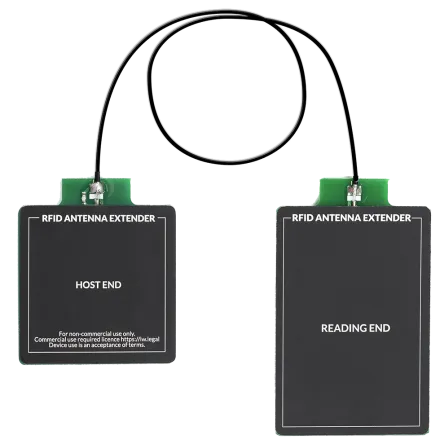
RFID Range Extenders
Price range: £30.00 through £39.00 Select options This product has multiple variants. The options may be chosen on the product page
RFID accessories for authorised testing
Antennas and range accessories help security professionals examine RFID and NFC systems in controlled environments. They can support access-control assessments, badge and tag research, interoperability checks, and training work where the equipment and signals are used with permission.
The available RFID Range Extenders are intended for setups where greater separation between the reader and tag is useful. Consider the frequency and antenna arrangement required by the system under assessment before selecting an accessory. Low-frequency and high-frequency RFID work use different operating ranges, so an accessory designed for one band may not suit another.
Choosing Proxmark3 accessories
Proxmark3 accessories vary by hardware compatibility and intended operating range. A Proxmark3 antenna or Proxmark3 RDV4 antenna should be matched to the relevant Proxmark3 revision and the LF or HF system being tested. Long-range antenna options are designed for testing scenarios where increased working distance is needed, while standard antennas may be more suitable for close-range analysis and portable work.
Other commonly used options include a Proxmark3 battery module for mobile setups, a Proxmark3 case for physical protection, and the Proxmark3 BlueShark module, which combines Bluetooth and battery functionality. Check the manufacturer’s compatibility information before buying Proxmark3 RDV4 accessories, including any antenna, module or case.
United Kingdom and Ireland considerations
- Transmitting is regulated in the United Kingdom and Ireland under Ofcom licence-exempt rules and the Wireless Telegraphy Act; receiving and analysing signals for authorised testing is the normal use.
- Licence exemptions apply only when equipment meets the relevant technical conditions, including frequency, power and interference limits. Review current Ofcom requirements and applicable Irish rules before transmitting.
- Use these tools only with written permission and within the agreed scope of an engagement. Keep testing away from live systems unless the owner has approved the activity.
- Prices are shown in GBP or EUR, with USD also available. VAT is calculated at checkout.
For professional deployments, confirm the antenna connector, supported frequency band, Proxmark3 revision and operating environment before ordering.
Frequently asked questions
What are Proxmark3 accessories used for?
Proxmark3 accessories support authorised RFID and NFC testing, research and education. Antennas and range extenders can help assess tags, cards and readers in controlled environments, while compatible battery, Bluetooth and case options support particular hardware configurations.
What is the difference between LF and HF RFID antennas?
LF and HF antennas support different RFID frequency ranges and are not interchangeable by default. Choose an antenna that matches the technology under assessment and confirm compatibility with the specific Proxmark3 hardware revision before use.
Is transmitting with RFID equipment regulated in the UK and Ireland?
Yes. Transmitting is regulated in the United Kingdom and Ireland under Ofcom licence-exempt rules and the Wireless Telegraphy Act. Licence exemptions have technical conditions, so review current UK and Irish requirements before transmitting. Receiving and analysing signals for authorised testing is the normal use.
How do I choose a Proxmark3 RDV4 antenna?
Match the antenna to the Proxmark3 RDV4 revision, the required LF or HF frequency range and the working distance needed for the engagement. Long-range options suit greater separation, while standard antennas may suit close-range analysis. Check manufacturer compatibility details before ordering.